Top 10 Green Technologies Shaping the Future of Sustainability

The window for meaningful climate action is narrowing. Atmospheric CO₂ concentrations surpassed 420 ppm in 2023, and global temperatures continue their upward trajectory. Yet the same decade that brought these warnings has also produced an unprecedented wave of green technologies — practical, scalable solutions that are already reshaping energy systems, industrial processes, and supply chains worldwide.
This overview is designed as a primer for professionals who want to understand which technologies are driving real progress, whether you're attending an environmental best-practices conference, advising your organization on sustainability strategy, or simply trying to separate signal from noise in a crowded field.
Why Green Technology Matters Now More Than Ever
Green technologies matter because incremental improvements to existing systems are no longer sufficient — the scale and speed of environmental disruption require structural transformation. The transition to net-zero emissions by mid-century depends on deploying proven solutions at scale while continuing to develop the next generation of innovations.
What makes this moment different from previous sustainability conversations is convergence. Costs for solar and wind have fallen by more than 85% over the past decade. Battery storage is following a similar curve. Policy frameworks like the U.S. Inflation Reduction Act and the EU Green Deal are directing trillions toward clean infrastructure. The economic case and the environmental case are, for the first time, pointing in the same direction.
None of these technologies works in isolation. The most useful mental model is a sustainability stack — layered systems where clean energy powers smart infrastructure, which enables clean transport, which integrates with circular materials flows. Understanding each layer helps professionals identify where their work fits and where the highest-leverage opportunities lie.
1–3: Revolutionizing Energy — Solar, Wind, and Green Hydrogen
Solar, wind, and green hydrogen form the foundational triad of the clean energy transition, collectively capable of decarbonizing the majority of global electricity generation and many hard-to-abate industrial processes.
1. Solar Energy
Photovoltaic technology has moved from rooftop novelty to grid-scale backbone. Utility-scale solar farms now generate electricity at costs below new natural gas plants in most markets. Perovskite solar cells, currently in commercial development, promise efficiencies above 30% — significantly higher than conventional silicon panels. The practical challenge isn't generation anymore; it's integration with storage and grid management.
2. Wind Power
Onshore wind is the cheapest source of new electricity in many regions. Offshore wind adds a second dimension: stronger, more consistent winds and proximity to dense coastal populations. The UK's Hornsea complex and Denmark's planned North Sea installations demonstrate that offshore wind can anchor national energy strategies. Floating offshore turbines are extending viable deployment zones to deeper waters previously considered inaccessible.
3. Green Hydrogen
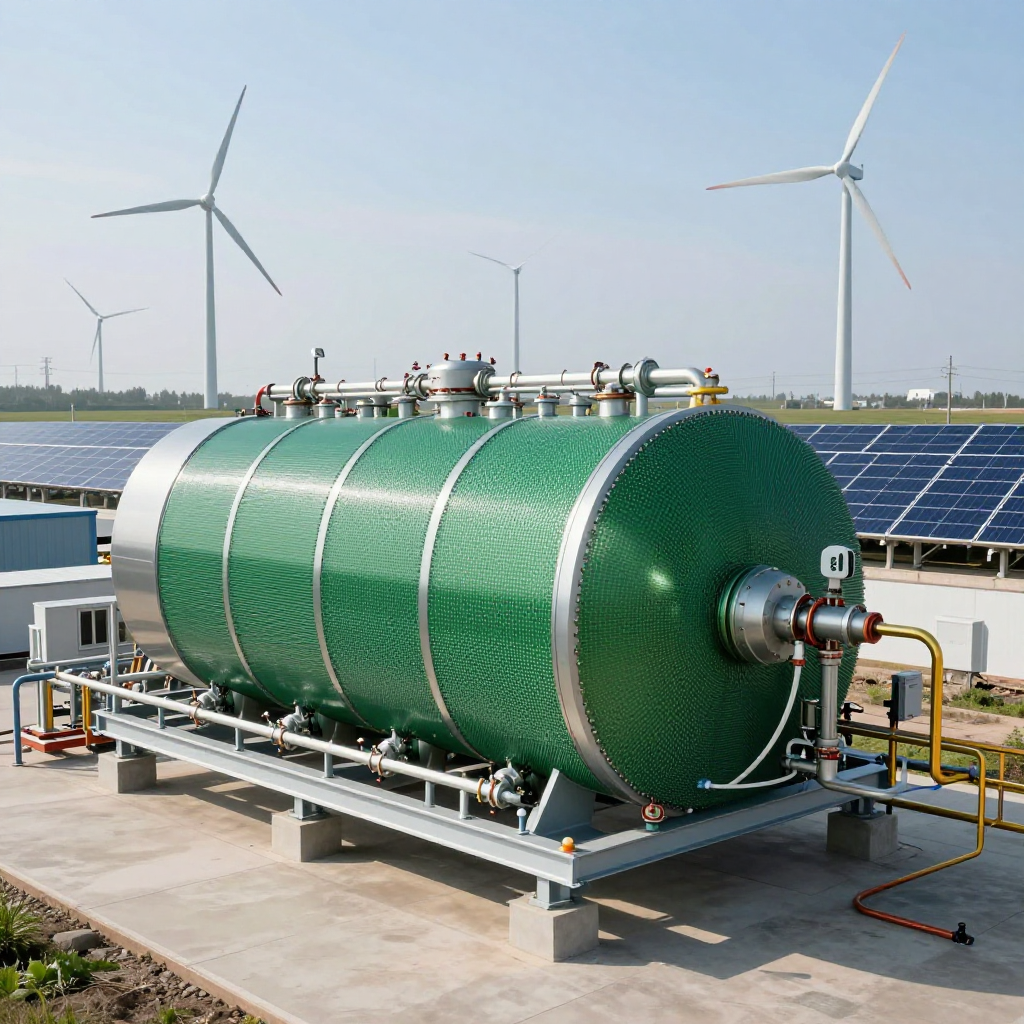
Green hydrogen — produced by electrolysis powered by renewable electricity — addresses the hardest decarbonization problems: steel production, shipping, aviation, and industrial heat. It's not a replacement for direct electrification where that's feasible, but it fills critical gaps where batteries can't. Current production costs remain high (roughly $3–6 per kilogram in most markets), but electrolyzer costs are dropping rapidly, and several countries are building national hydrogen strategies around it.
4–5: Smarter Systems — Smart Grids and Advanced Energy Storage
Smart grid technology and advanced energy storage solve the core reliability problem of renewable energy: the sun doesn't always shine, and the wind doesn't always blow. Together, they make variable generation sources dependable enough to anchor modern power systems.
4. Smart Grid Technology
A smart grid uses digital sensors, real-time data analytics, and automated controls to balance electricity supply and demand dynamically. Unlike traditional grids built for one-directional power flow, smart grids accommodate distributed generation from rooftop solar, respond to demand-side flexibility, and reroute power around failures automatically. Cities like Amsterdam and Austin have used smart grid investments to reduce peak demand by 10–15%, which directly reduces the need for fossil fuel peaker plants.
5. Advanced Energy Storage Systems
Lithium-ion batteries dominate grid-scale storage today, but the field is diversifying. Iron-air batteries, vanadium flow batteries, and compressed air energy storage are entering commercial deployment, each with different trade-offs between energy density, duration, and cost. The key metric for grid planners is duration: short-duration storage (2–4 hours) smooths daily solar curves; long-duration storage (8–100+ hours) addresses seasonal variation. Getting both right is essential for a grid running on 80%+ renewables.
6–7: Rethinking Industry — Carbon Capture and Circular Economy Models
Industrial emissions and material waste represent two of the most stubborn challenges in environmental strategy. Carbon capture and storage addresses the first; circular economy models tackle the second — both at systemic scale.
6. Carbon Capture and Storage (CCS)
Carbon capture and storage involves capturing CO₂ at emission sources (cement plants, steel mills, power stations) or directly from the atmosphere, then storing it underground or converting it into useful products. CCS is not a license to continue burning fossil fuels unchecked — critics rightly note the risk of moral hazard. But for industries where emissions are chemically unavoidable during production, it may be the only viable path to net-zero. The IEA's net-zero scenarios require capturing roughly 1.7 billion tonnes of CO₂ annually by 2030, compared to about 45 million tonnes captured today.
7. Circular Economy Models
The circular economy reframes waste as a design failure. Instead of the linear take-make-dispose model, circular systems keep materials in use through repair, remanufacturing, and recycling. Companies like Renault and Caterpillar have built remanufacturing operations that use 80% less energy than producing new parts. For conference professionals, the circular economy is particularly relevant because it requires systemic thinking — it can't be implemented by one company alone; it requires supply chain coordination and policy alignment.
8–9: Sustainable Mobility and Agriculture
Transportation and food production together account for roughly 40% of global greenhouse gas emissions. Electric vehicles and precision farming are the green technologies making the deepest inroads in these sectors.
8. Electric Vehicles and Clean Transportation
Electric vehicles are the most visible green technology in daily life, and adoption is accelerating: global EV sales exceeded 14 million units in 2023, representing about 18% of new car sales. The lifecycle emissions advantage of EVs over internal combustion vehicles grows as electricity grids get cleaner. The remaining challenges — charging infrastructure in rural areas, battery supply chain sustainability, and affordability in lower-income markets — are real but solvable with the right policy and investment mix.
9. Sustainable Agriculture and Precision Farming
Precision farming uses GPS mapping, soil sensors, drone imagery, and AI-driven analytics to apply water, fertilizer, and pesticides exactly where and when needed — reducing input use by 15–25% on average while maintaining or improving yields. Regenerative agriculture practices like cover cropping and no-till farming go further, actively rebuilding soil carbon. For organizations working on food system sustainability, these technologies offer a rare combination: lower environmental impact and lower operating costs.
10: The Rise of Biodegradable Materials and Bioplastics
Biodegradable materials and bioplastics represent the materials innovation layer of the sustainability stack — addressing the roughly 400 million tonnes of plastic waste generated globally each year.
Bioplastics derived from corn starch, sugarcane, or algae can replace petroleum-based plastics in packaging, single-use items, and some durable applications. The distinction between "bio-based" and "biodegradable" matters: not all bio-based plastics break down easily in natural environments, and industrial composting conditions are often required. Honest adoption requires understanding these limitations rather than treating bioplastics as a universal solution.
More promising in the near term may be materials designed for circularity — plastics engineered for chemical recycling, packaging that dissolves in water, or mycelium-based materials that replace styrofoam. The field is moving quickly, and several innovations that were laboratory curiosities five years ago are now in commercial production.

How These Technologies Connect to a Sustainable Future
No single technology on this list solves the climate challenge alone. The power of this list lies in how these innovations reinforce each other: renewable energy powers green hydrogen production and EV charging; smart grids manage the variable output of solar and wind; circular economy models reduce the raw material demand that drives industrial emissions; precision agriculture cuts the food system's carbon footprint while feeding a growing population.
For professionals attending sustainability conferences, the most valuable takeaway is integration. Organizations that adopt green technologies piecemeal — installing solar panels without addressing supply chain emissions, or switching to EVs without greening their electricity source — capture only a fraction of the available impact. The goal is a coherent environmental strategy where each technology investment builds toward a net-zero, low-waste system.
The International Energy Agency's clean energy transition resources offer detailed roadmaps for how these technologies scale at the national and sectoral level — useful reference material for anyone building a conference presentation or organizational strategy around these themes.
The technologies exist. The economics are increasingly favorable. What remains is the organizational will to deploy them at the speed the science demands.
Frequently Asked Questions
What is considered a "green technology"?
A green technology is any innovation that reduces environmental harm compared to conventional alternatives — typically by lowering greenhouse gas emissions, reducing resource consumption, minimizing waste, or restoring natural systems. The term covers a wide range, from solar panels and wind turbines to biodegradable packaging and precision farming software.
Which green technology has the biggest impact on reducing carbon emissions?
No single technology dominates. According to Project Drawdown's analysis, a combination of reduced food waste, plant-rich diets, onshore wind, and utility-scale solar collectively offer the largest near-term mitigation potential. The most impactful approach is deploying multiple technologies simultaneously rather than betting on any one solution.
How can businesses start adopting green technologies?
The most practical starting point is an energy audit to identify the highest-emission activities, followed by switching to renewable electricity (through direct procurement or power purchase agreements). From there, businesses can address supply chain emissions, fleet electrification, and materials sourcing. Setting a science-based emissions target provides a framework for sequencing these investments.
Are green technologies affordable for developing nations?
Increasingly, yes — particularly for renewable energy. Solar and wind are now the cheapest sources of new electricity in most of the world, including many developing economies. The challenge is upfront capital access rather than technology cost. International financing mechanisms like the Green Climate Fund and blended finance instruments exist specifically to bridge this gap, though deployment remains uneven.
What role do green technologies play at environmental sustainability conferences?
Sustainability conferences serve as knowledge-sharing platforms where practitioners, policymakers, and innovators exchange what's working in real-world deployments. Green technologies are central to these conversations — not as abstract concepts, but as case studies in implementation, policy design, and scaling challenges. Attendees typically leave with both technical knowledge and a clearer sense of which solutions are ready to deploy versus which remain in development.