Implementing Effective Recycling Programs in Large Organizations
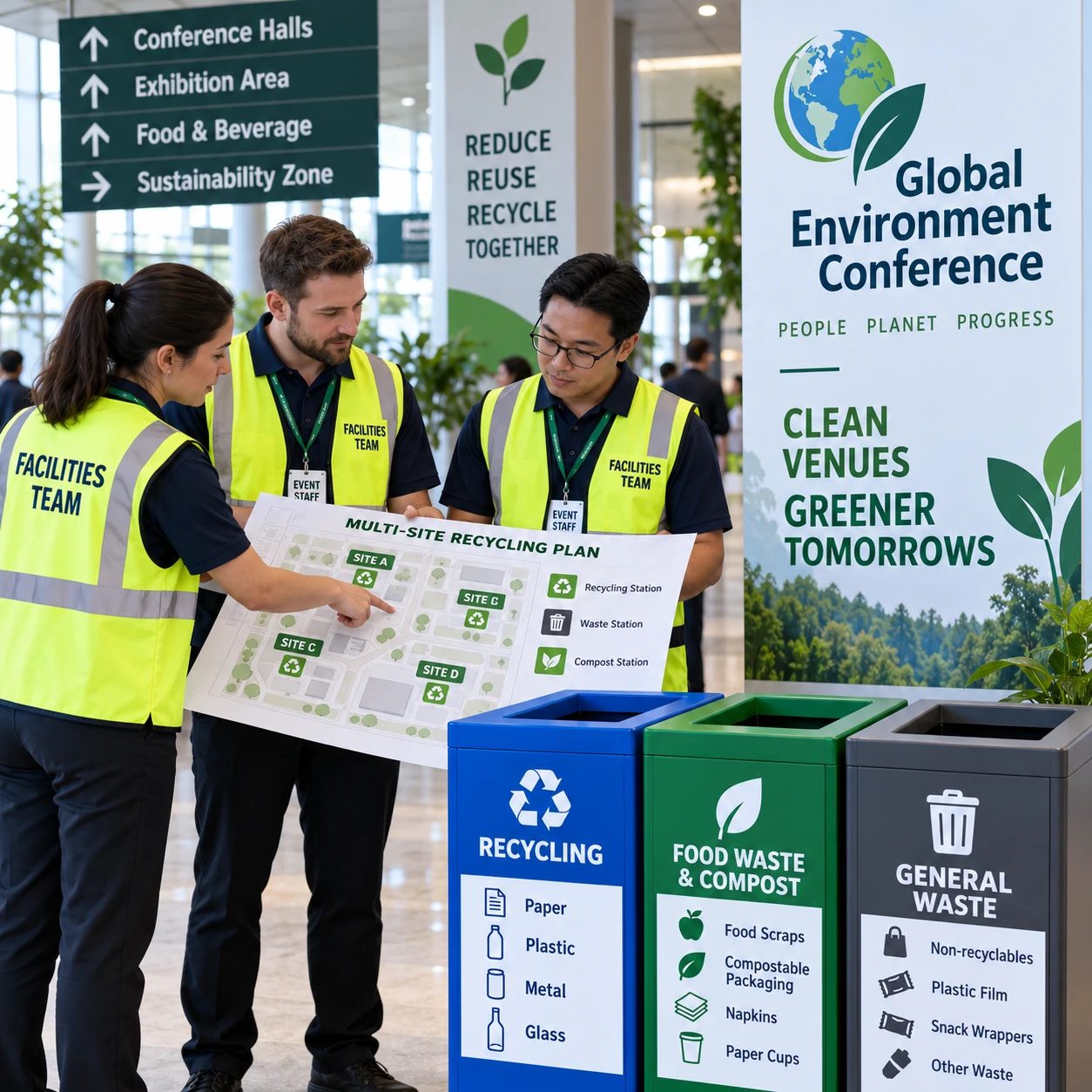
Recycling at scale takes more than adding bins to a break room. Large organizations need a program that fits their waste, buildings, workforce, and local recycling services, with clear ownership from planning through measurement.
A useful way to manage the work is to treat it as a cycle: assess what is discarded, design around local conditions, make sorting straightforward, support participation, and use results to improve. The same approach can work across offices, campuses, conference venues, warehouses, and other complex operations, even when their accepted materials differ.
Start with a Waste Audit and Clear Goals
Begin with a waste audit to learn what the organization throws away, where it comes from, and which materials local services can recover. Use those findings to set practical, measurable recycling goals rather than choosing targets before you know the baseline.
Review available waste invoices, hauling records, and service contracts, then inspect representative spaces: offices, kitchens, loading areas, meeting rooms, and event floors. A short waste sort can identify common materials, such as cardboard, office paper, food scraps, beverage containers, and residual waste. Include different shifts or operating days if waste patterns change over time.
Record the details that will shape the program: current recycling streams, collection frequency, bin locations, contamination concerns, and gaps in vendor reporting. A conference center, for example, may generate a surge of food-service packaging during events, while a corporate office may produce more paper and shipping materials.
Set a small number of goals tied to the baseline. Examples include increasing participation in a pilot building, reducing contamination in a particular stream, or ensuring every site has documented sorting guidance. Specify the measurement method and review date for each goal. This makes progress easier to verify and helps prevent a target from becoming a slogan disconnected from daily operations.
Design a Program for Multiple Sites and Teams
A multi-site recycling program should use shared standards where possible and local rules where necessary. Keep the core system recognizable across locations, but confirm accepted materials and collection options with the service provider at each site.
Start by grouping locations according to operating conditions. Useful factors include building type, local recycling services, tenant or landlord arrangements, food service, public access, and waste volume. A small administrative office and a high-traffic conference venue may need different recycling streams, collection schedules, and staff support.
Define what must be consistent, such as the program’s visual identity, reporting terms, and process for escalating service problems. Then document local variations in a site guide. One location might accept glass in its container stream; another may not. Treating those rules as universal can lead to contamination and rejected loads.
Use a phased rollout rather than launching everywhere at once. Pilot the system in a few locations with different operating profiles, gather feedback, and adjust the design before expanding. A pilot takes time, but it can expose confusing instructions, poorly placed bins, or contract limitations before they affect the whole organization.
Build the Right Infrastructure and Guidance
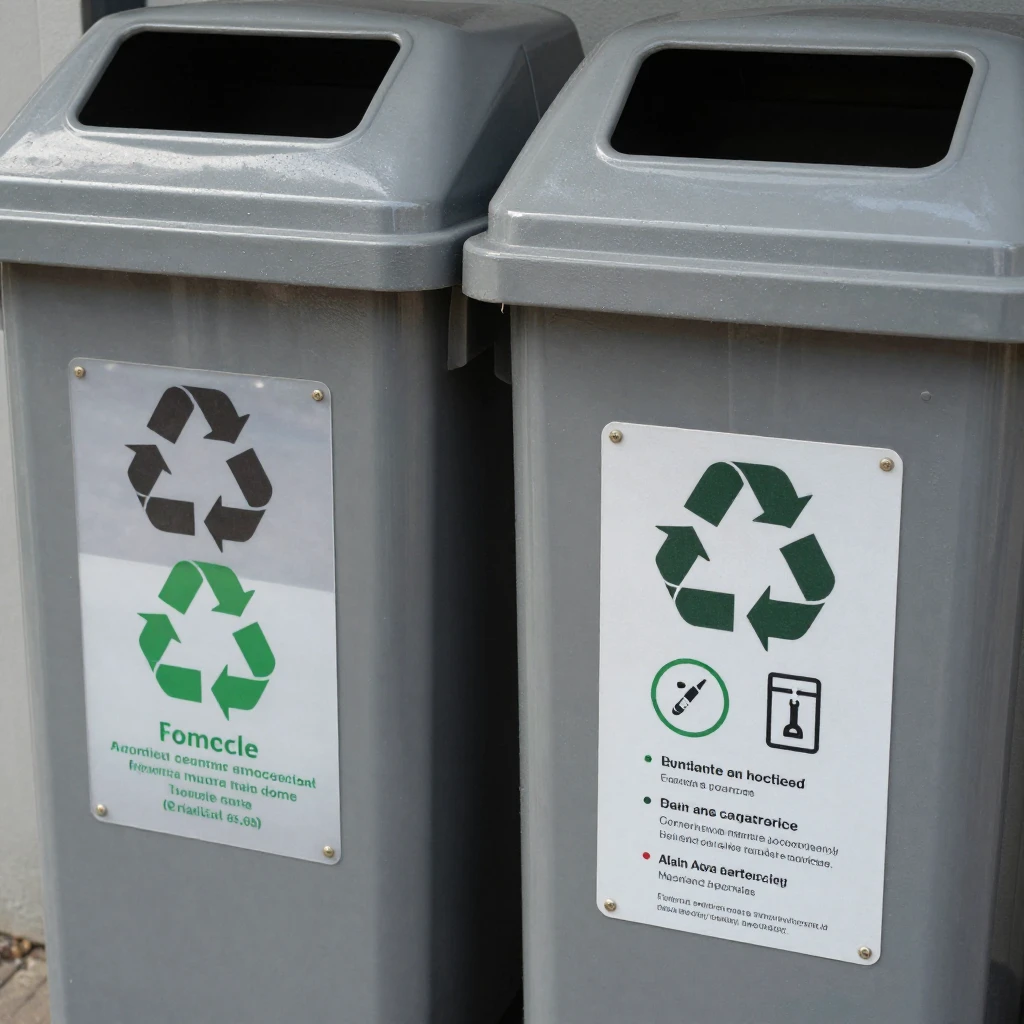
Effective recycling infrastructure puts the right containers where materials are generated and makes sorting decisions clear at the moment of disposal. Pair accessible bins with consistent labels and instructions that reflect the materials accepted at that location.
Map waste-generating activities before choosing bin sizes or locations. Place recycling and landfill bins together where people make disposal decisions, such as beside shared printers, kitchen counters, or event exits. If a recycling bin is far from the point of use, convenience may push people toward the nearest container instead.
Use a consistent design system across sites: stable colors where local conventions allow, plain-language labels, and pictures of commonly discarded items. Include examples of items that do not belong in a stream, especially when look-alike packaging causes confusion. Keep waste sorting guidelines short enough to scan quickly; detailed instructions can live in a site guide or on an internal page.
Choose bin openings that suit the intended material and are easy to maintain. A narrow opening may discourage misplaced items, but it can also slow disposal during a busy conference break. Test the setup with facilities staff and users before ordering equipment for every site.
Engage Employees and Assign Ownership
Employee engagement improves when people know what goes where, why the system works that way, and whom to contact when it fails. Assign a program lead at the organizational level and local contacts who can keep the system working in each building or team.
Program leadership should cover decisions that span the organization: goals, budgets, vendor standards, communications, and performance reviews. Local champions can spot full or misplaced bins, answer common questions, and report changes in operations. Give them a clear escalation route so they are not expected to solve contract or facilities issues on their own.
Explain the program in the places employees already receive operational information: onboarding, team updates, event briefings, and facilities notices. A short demonstration can be more useful than a broad sustainability message. For a conference, include sorting guidance in exhibitor and catering instructions, then use signs at service areas to reinforce it.
Invite feedback during the pilot and after changes. Ask which labels are unclear, which bins are hard to reach, and what materials people encounter that are missing from the guidance. Participation is not a substitute for sound infrastructure, though. If the bins are inconvenient or collection is unreliable, repeated reminders will have limited effect.
Coordinate with Recycling and Waste Partners
Coordinate with recycling and waste partners before setting signage, collection plans, or organization-wide rules. Confirm accepted materials, preparation requirements, container needs, and reporting options for every service area.
Ask vendors for current written specifications, including whether containers must be empty, whether lids or labels need to be removed, and how food residue affects acceptance. Verify whether collection is single-stream or separated into distinct recycling streams. These details should inform waste sorting guidelines, not be left to employee guesswork.
Agree on practical service expectations with each provider. Confirm collection frequency, procedures for missed pickups, how contamination is reported, and whether weight or volume data can be supplied by site and material. If the organization works with several haulers, standardize the questions and reporting categories so results can be compared without pretending local services are identical.
Review contracts and landlord arrangements before making changes to bins or collection schedules. Some sites cannot change providers or add a material stream immediately. In those cases, document the constraint, share accurate local instructions, and revisit the opportunity during the next service review.
Measure Results and Improve the Program
Measure recycling performance with a consistent set of metrics that shows both what the program collects and how well the system works. Use those results to address contamination, service issues, and uneven performance across sites.
Choose metrics that match the data available and the goals set after the audit. A useful dashboard may track:
- Recycling and landfill material collected by site or stream, using the same units and time periods.
- Contamination observations, such as audit findings or vendor-reported rejected loads.
- Participation indicators, such as the share of sites with active guidance and trained local contacts.
- Service reliability, including missed collections or recurring overflow reports.
Interpret numbers in context. A rise in recycling tonnage may reflect higher activity, a new service, or improved capture; it does not automatically prove that overall waste has fallen. Compare like with like, note changes in occupancy or event volume, and avoid environmental-impact claims unless the calculation method and underlying data are clear.
When contamination appears, investigate the cause before sending another reminder. Check whether the vendor changed acceptance rules, labels are unclear, bins are poorly placed, or a common item has no suitable local outlet. Correct the underlying problem, then check whether the next audit or service report shows improvement.
Set a regular review rhythm, such as quarterly checks for active sites and an annual program-wide assessment. Use a simple improvement loop: identify the problem, test one change, review the evidence, and update the site guidance if the change works. Recycling programs need maintenance as buildings, vendors, products, and local services change.
Frequently Asked Questions
Where should a large organization begin with recycling?
Begin with a waste audit and a review of local collection services. Establish a baseline, choose measurable goals, and pilot the program in a few representative locations before expanding.
How can recycling rules be made consistent across locations?
Standardize the program’s visual system, reporting terms, and ownership process, then create site-specific instructions for materials accepted locally. Consistency should make the rules easier to recognize, not erase real differences in service.
How can an organization reduce contamination?
Confirm vendor requirements, place paired bins where waste is generated, and use clear labels with examples of accepted and excluded items. Review contamination reports or audit results to find the cause, then adjust the setup or guidance.
What should be measured to assess program performance?
Track collected material by stream and site, contamination, service reliability, and progress against the goals set at launch. Interpret changes alongside activity levels and service changes so the data supports sound decisions.