Circular Economy Models: Success Stories from Industry Leaders
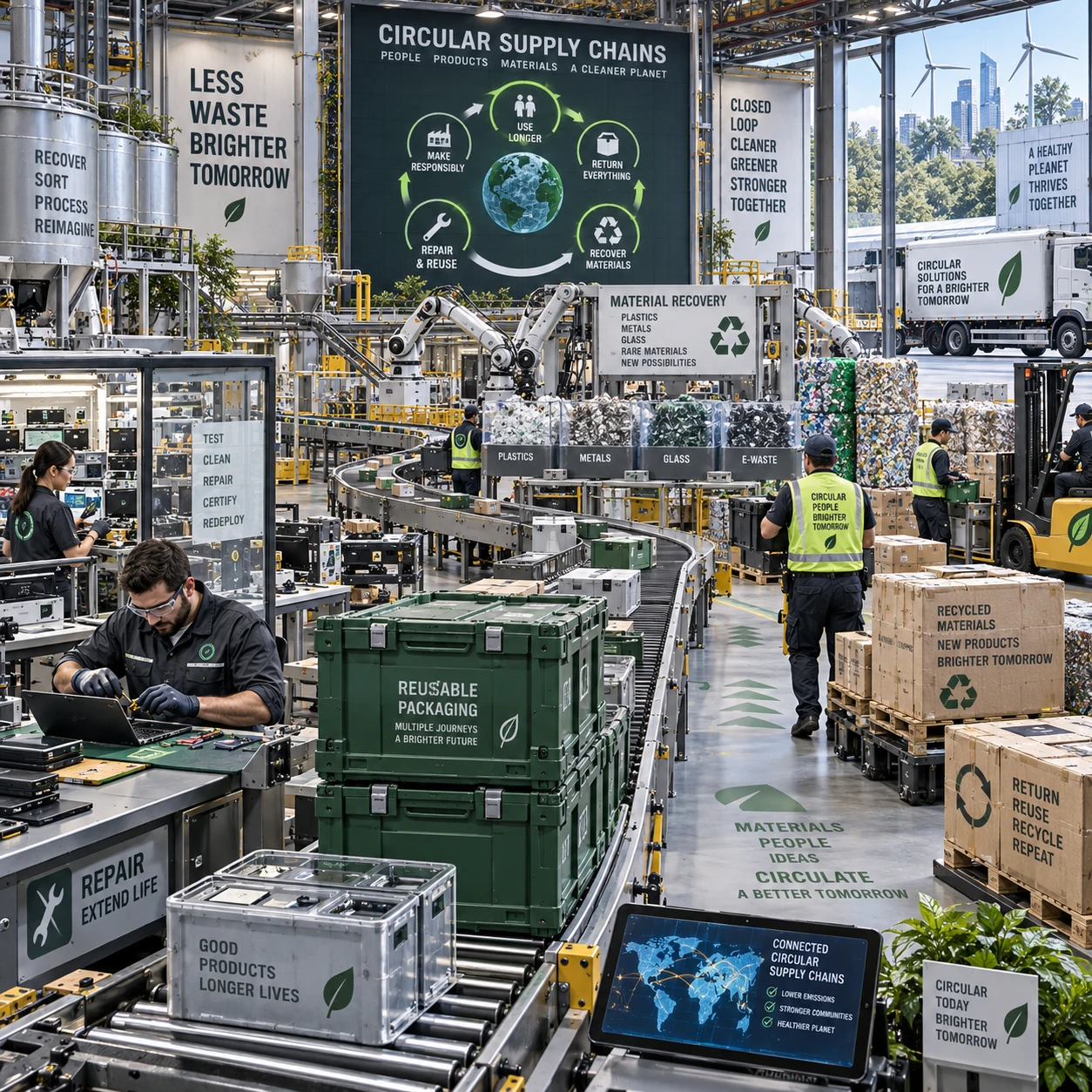
Businesses are finding practical ways to keep products, components, and raw materials in use for longer. These circular economy models can reduce reliance on virgin resources and create new services, but their success depends on design, logistics, customer participation, and credible measurement.
What a Circular Economy Model Looks Like
A circular economy model keeps products and materials in use at their highest practical value, rather than moving them through a one-way take-make-dispose system. It combines choices in product design, business operations, and supply chains to prevent waste and recover value.
In a linear model, a company extracts resources, makes a product, sells it, and often loses control of it at end of life. Circularity changes that sequence. A manufacturer might make equipment easier to repair, collect it after use, refurbish working components, and recover materials that cannot be reused.
The aim is broader than recycling. Product life extension, reuse, and repair typically preserve more of a product’s embedded labor and materials than breaking it down for recycling. Material recovery still matters, especially when products reach the end of their useful life, but it is one part of a hierarchy of strategies.
For organizations, the practical test is whether a model retains value while accounting for its full system. Reverse logistics, energy use, transport, and product durability all affect the result. A reusable package, for example, only makes environmental sense when it completes enough trips to outweigh the impacts of producing and washing it.
Common Models Businesses Can Apply
Businesses can apply circular economy models through repair, reuse, product-as-a-service, and material recovery. The right choice depends on the product, customer needs, and whether the company can manage items after sale.
Repair and refurbishment extend product life by fixing faults, replacing worn parts, and restoring items for continued use. This model works best when products are designed for disassembly and spare parts remain available. It can also require trained technicians and a dependable service network.
Reuse and resale give products or packaging another use cycle. Businesses may collect, inspect, clean, and resell returned goods, or design durable containers that circulate between suppliers and customers. Reuse depends on convenient return points and clear standards for condition and safety.
Product-as-a-service shifts the offer from ownership to access or performance. A company might lease equipment and remain responsible for maintenance and recovery. Because the provider retains an interest in durability, this structure can encourage longer product life. It also asks the provider to finance assets and manage them over time.
Recycling and material recovery turn discarded products into feedstock for new production. High-quality recovery depends on material choices, sorting, collection systems, and reliable buyers. When design mixes materials that are difficult to separate, recycling may preserve less value or become impractical.
Some businesses also pursue industrial symbiosis, where one facility’s by-product becomes another’s input. This requires compatible materials, consistent supply, and coordination between organizations. Across all these models, resource efficiency means using fewer materials and energy per unit of useful service, not simply reporting less waste at one site.
How Industry Leaders Put Circularity into Practice
Industry leaders put circularity into practice by changing how products are designed, sold, collected, and processed. Their examples illustrate approaches that other organizations can evaluate, while outcomes should be checked against current company reporting and independent evidence.
Patagonia: Repair and resale
Outdoor apparel company Patagonia has built repair and resale into its customer offering through its Worn Wear program. Customers can trade in eligible used clothing and shop for used items, while repair services help garments stay in use. The transferable lesson is to connect product durability with an accessible service route. Repair programs still depend on the cost and availability of labor, parts, and shipping.
Interface: Recovered materials in manufacturing
Commercial flooring manufacturer Interface has described efforts to incorporate recycled and bio-based materials into its products and to reduce manufacturing waste. Its example highlights the role of supplier relationships and product specifications: recovered inputs have to meet performance requirements and arrive with sufficient consistency. Companies considering similar changes should review product-level disclosures and distinguish stated goals from independently verified results.
Philips: Service-based lighting
Philips has offered lighting-as-a-service arrangements in which customers pay for lighting services while the provider takes responsibility for equipment and maintenance. Such contracts can align incentives around efficient operation and equipment recovery. They also require careful agreement design: who owns the assets, who pays for upgrades, and how returned equipment is handled all matter.
These cases show different routes rather than a single template. Repair preserves products, recycled inputs change manufacturing supply, and service models alter ownership and maintenance. The strongest lesson is to match the model to the material flow and then report what has actually been achieved.
What Makes Circular Initiatives Work
Circular initiatives work when product design, reverse logistics, partnerships, and daily operations support the same material loop. A promising concept can fail if returned products arrive too late, cannot be sorted, or have no dependable next user.
Start with design. Durable products should be repairable, and products intended for recycling should use materials that can be identified and separated. Designers need input from repair teams, recyclers, procurement staff, and customers before specifications are fixed.
Next, plan the return journey. Reverse logistics includes collection, transport, inspection, sorting, storage, and redistribution. Companies can test a small return route first, measuring return rates, handling time, rejected items, and cost per recovered unit. Those figures expose operational problems before a program expands.
Supply chain collaboration is equally important. Suppliers may need to provide material composition data, recyclers need predictable volumes, and customers need clear instructions. In industrial symbiosis, partners must agree on quality thresholds, delivery schedules, and what happens when a by-product’s supply or specification changes.
Finally, establish a baseline and measure outcomes at the right level. Track product life, reuse cycles, repair rates, virgin material use, and the share of recovered material that actually returns to production. Waste diverted from landfill is useful information, but it does not by itself show whether a system reduced total resource use or emissions.
Challenges and Lessons for Wider Adoption
Circular economy models are difficult to scale when collection infrastructure, economics, product design, or customer behavior do not support repeated use. Treating these barriers as operational questions early helps organizations avoid investing in loops that cannot close.
- Infrastructure gaps: Collection, repair, sorting, and recycling capacity may be uneven or unavailable. Pilot in locations where a return pathway exists, then identify the investment needed to serve other regions.
- Coordination costs: Multiple firms must align data, quality standards, and schedules. Use written specifications and shared measurement rules, especially in industrial symbiosis and material recovery partnerships.
- Unclear economics: Reverse logistics and refurbishment add costs, while recovered materials may fluctuate in price or quality. Compare the full cost per usable product or recovered input with the current alternative; do not assume that circular automatically means cheaper.
- Customer habits: Returns and repairs require effort. Make instructions simple, provide convenient collection options, and explain the value of the service without overstating environmental benefits.
A frequent mistake is launching a take-back scheme before confirming where collected goods will go. The result can be storage, low recovery rates, or exported waste with limited traceability. Secure downstream partners and document final destinations before promoting a collection campaign.
Another is using recycled content as the sole measure of circularity. Recycled input can help reduce demand for virgin material, but it says little about product lifespan, repairability, or end-of-life recovery. Use a small set of complementary indicators and disclose boundaries, assumptions, and trade-offs.
Circular Economy Conversations at Environmental Conferences
Environmental conferences help organizations compare circular economy models, test assumptions, and find partners for shared material flows. The most useful discussions connect case studies to operational evidence, not just ambitious targets.
For a conference session, participants can map one product’s journey from raw material to end of use, then identify where value is lost. A manufacturer, local authority, logistics provider, repair business, and recycler may see different obstacles in the same chain. Putting those perspectives together can reveal a practical collaboration opportunity.
Useful questions for panels and workshops include:
- Which materials or products are suitable for reuse, repair, or product-as-a-service, and which are better handled through material recovery?
- Who pays for reverse logistics, and who owns returned products and data?
- What evidence distinguishes a successful pilot from a scalable circular business model?
- How can supply chain partners share quality standards and report environmental outcomes consistently?
When companies bring both results and limitations to the conversation, others can learn faster. A credible case study explains the operating model, the conditions it depends on, and what remains unresolved. That level of detail turns an environmental conference from a showcase into a place where circular systems can be designed together.